 Tower Rush
How to play Tower Rush: the rules, button by button
 Zeeshan MirzaInstant games analyst
Tower Rush takes one round to learn and a lot longer to understand. The buttons are simple: Build and Cashout. The part that catches people out is what happens between them, because the odds of each floor multiply and some of them are below x1.
This guide uses screenshots from the official Galaxsys demo, taken while we played. Every rule quoted here is from the game's own Rules panel.
Tower Rush,
on your phone.
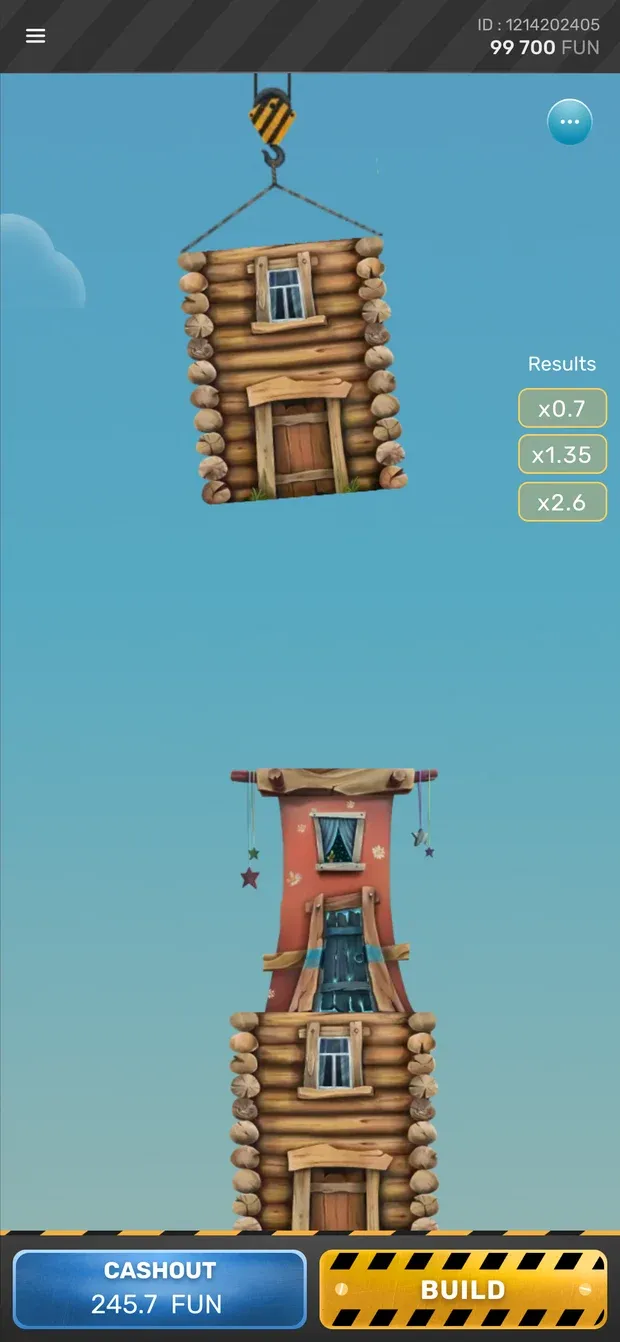
The same Galaxsys game in portrait mode: Build and Cashout under your thumb, the three bonus floors, PKR balance and JazzCash or Easypaisa at the cashier.
Get the app Download from the operator, not from a file-sharing link. 18+ only. Gambling can be addictive.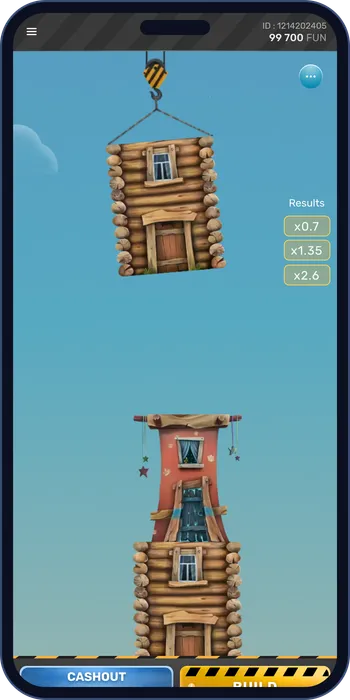
The idea in one sentence
You stack floors on a tower; each floor that lands multiplies your stake by its odds, and you choose when to cash out before a floor collapses and wipes the round.
A few facts sit underneath that sentence:
- Odds are random for every floor. The game shows a minimum of x0.4 and, on regular floors, we never saw more than x3.
- There is no fixed number of floors. The rules call the potential number of floors "limitless".
- The game is a single-player round. Other players' bets in the side panel have no effect on your tower.
- The return to player is 95.46%–98.5%, depending on the configuration the casino picked.
The screen, button by button
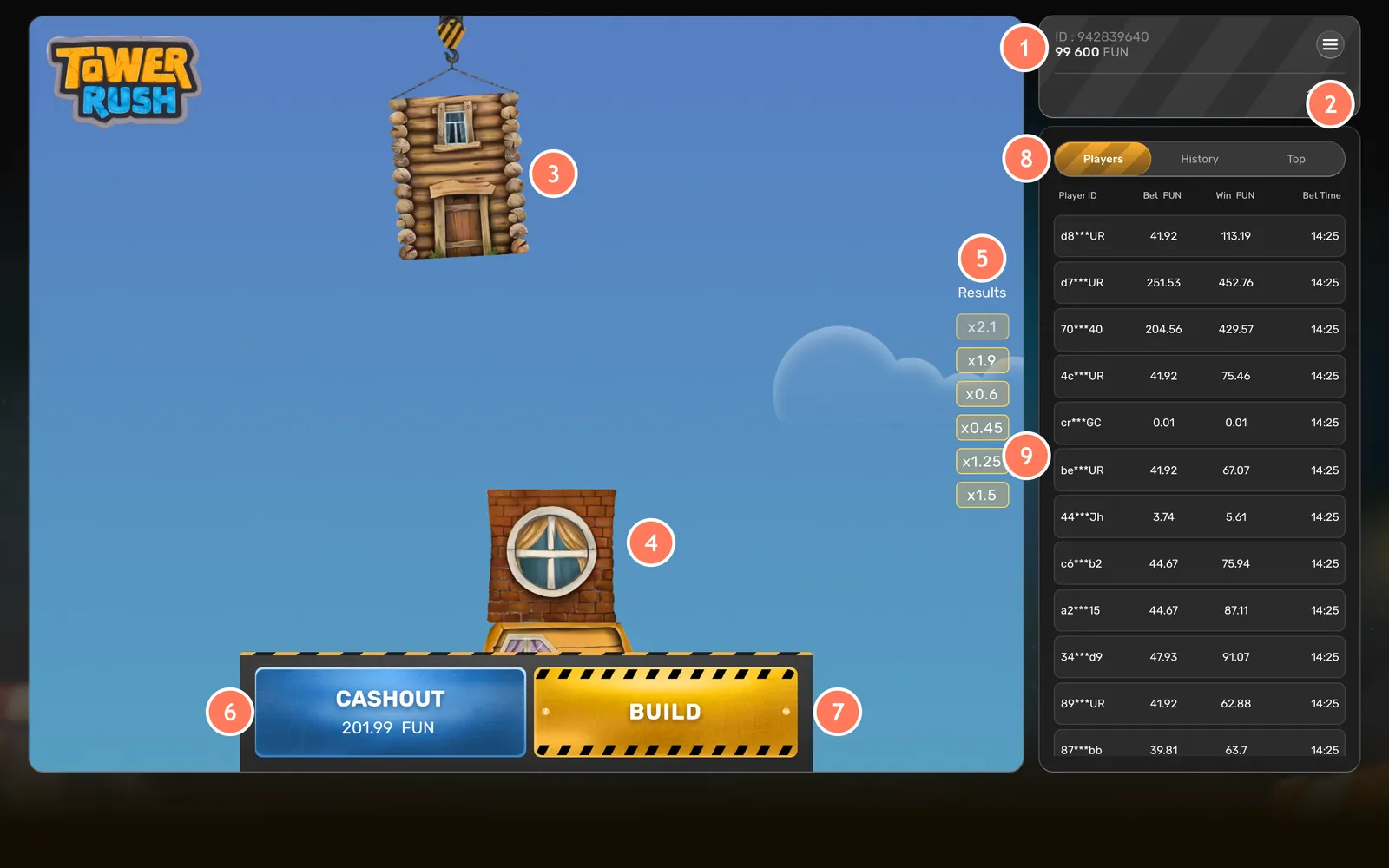
The numbered figure below maps every part of the table during a round. In words:
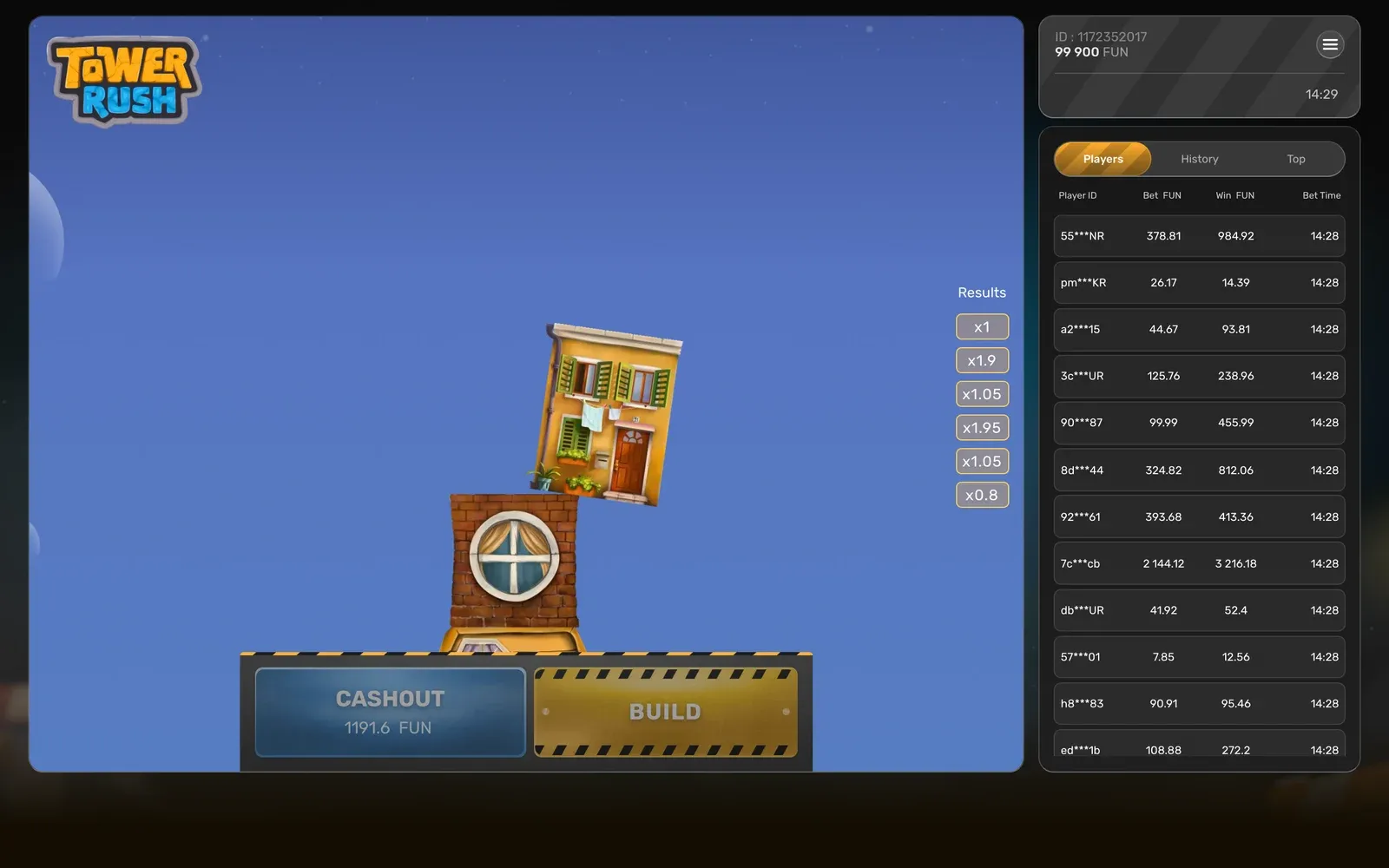
- Balance — top right, with your player ID. In the demo it shows FUN; at a casino, PKR or the account currency.
- Menu — the round button next to the balance: sound, Rules, and links to other Galaxsys games.
- Crane — carries the next floor. Nothing on the floor tells you its odds or whether it is a bonus floor.
- Tower — the floors that have landed this round. The camera rises with it, so only the top floors stay in view.
- Results column — the odds of each landed floor, newest at the top. This is where x0.45 or x0.6 floors become obvious.
- Cashout — shows the win you would bank right now, and banks it when pressed.
- Build — drops the next floor.
- Players / History / Top — tabs for live bets, your own rounds and the biggest wins.
- Live bets — masked player IDs with stake, win and time.
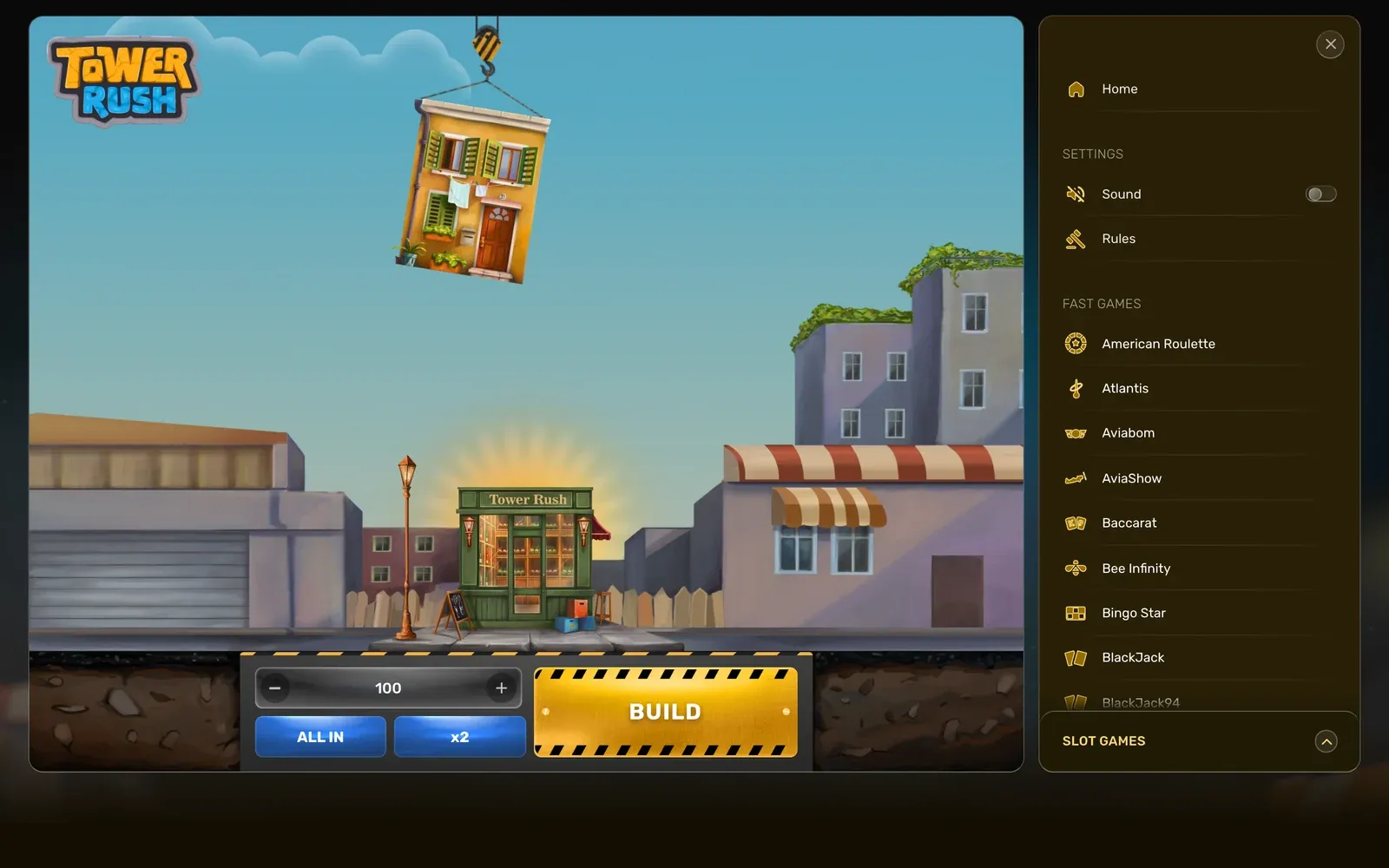
Before a round starts, the Cashout button is replaced by the stake field with − and +, plus two shortcuts: x2 and All in. All in stakes your whole balance in one tap; it is the one button to leave alone.
When you open the game, a notice appears first: Minimum Coefficient x0.4, Maximum Win Coefficient Unlimited. "Unlimited" describes the game design; the casino still sets a maximum win per bet.
A round step by step
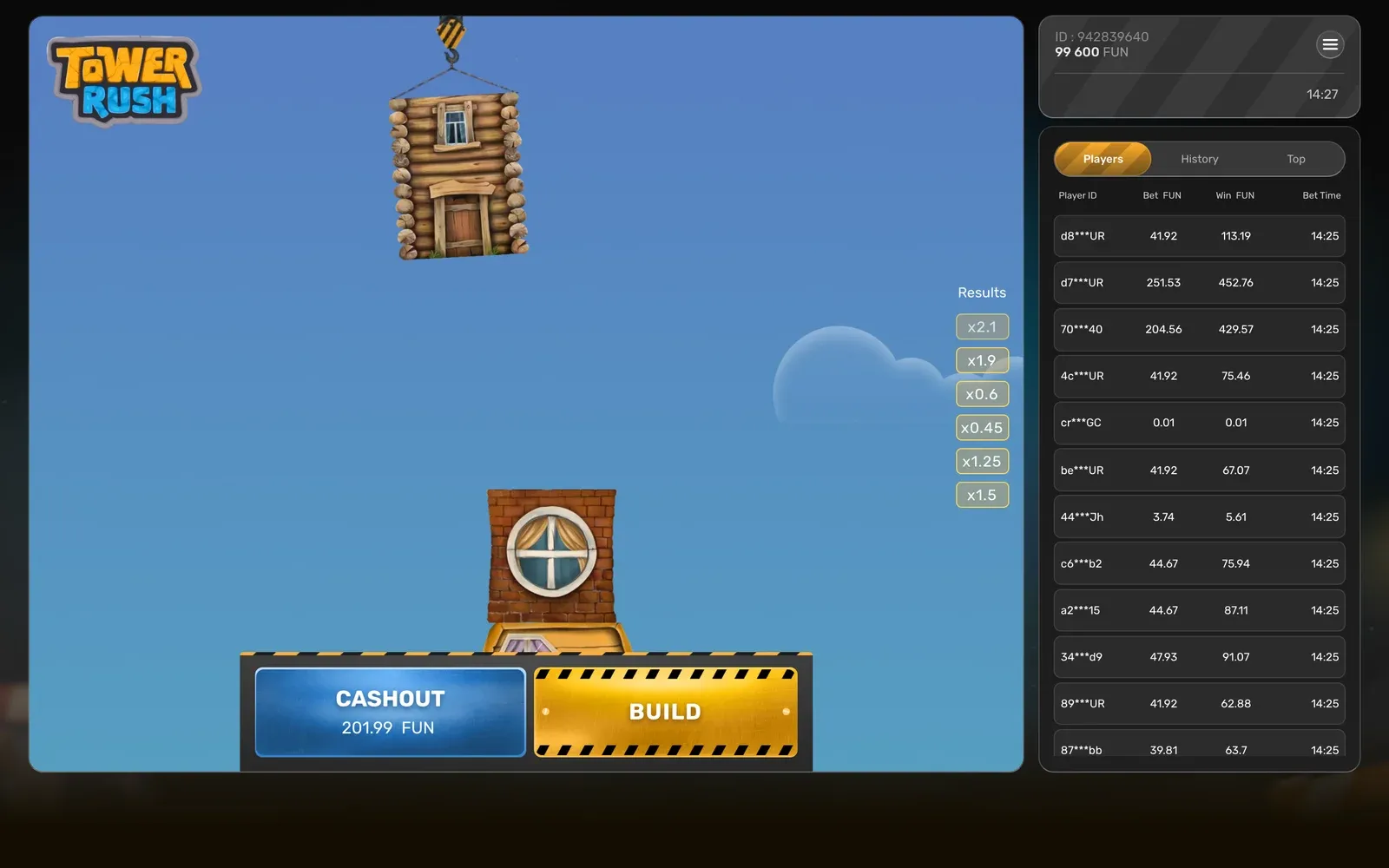
Here is the round in the screenshots on this page, played in the demo with a stake of 100 FUN. Read the Results column from the bottom up.
- Press Build. The first floor lands at x1.5. Cashout shows 150 FUN.
- Build again. Second floor: x1.25. Cashout: 187.50 FUN.
- Build again. Third floor: x0.45. The tower grew; the win fell to 84.38 FUN, below the stake.
- Build again. Fourth floor: x0.6. Win: 50.63 FUN. Half the stake is gone, on a "successful" floor.
- Build again. Fifth floor: x1.9. Win: 96.19 FUN.
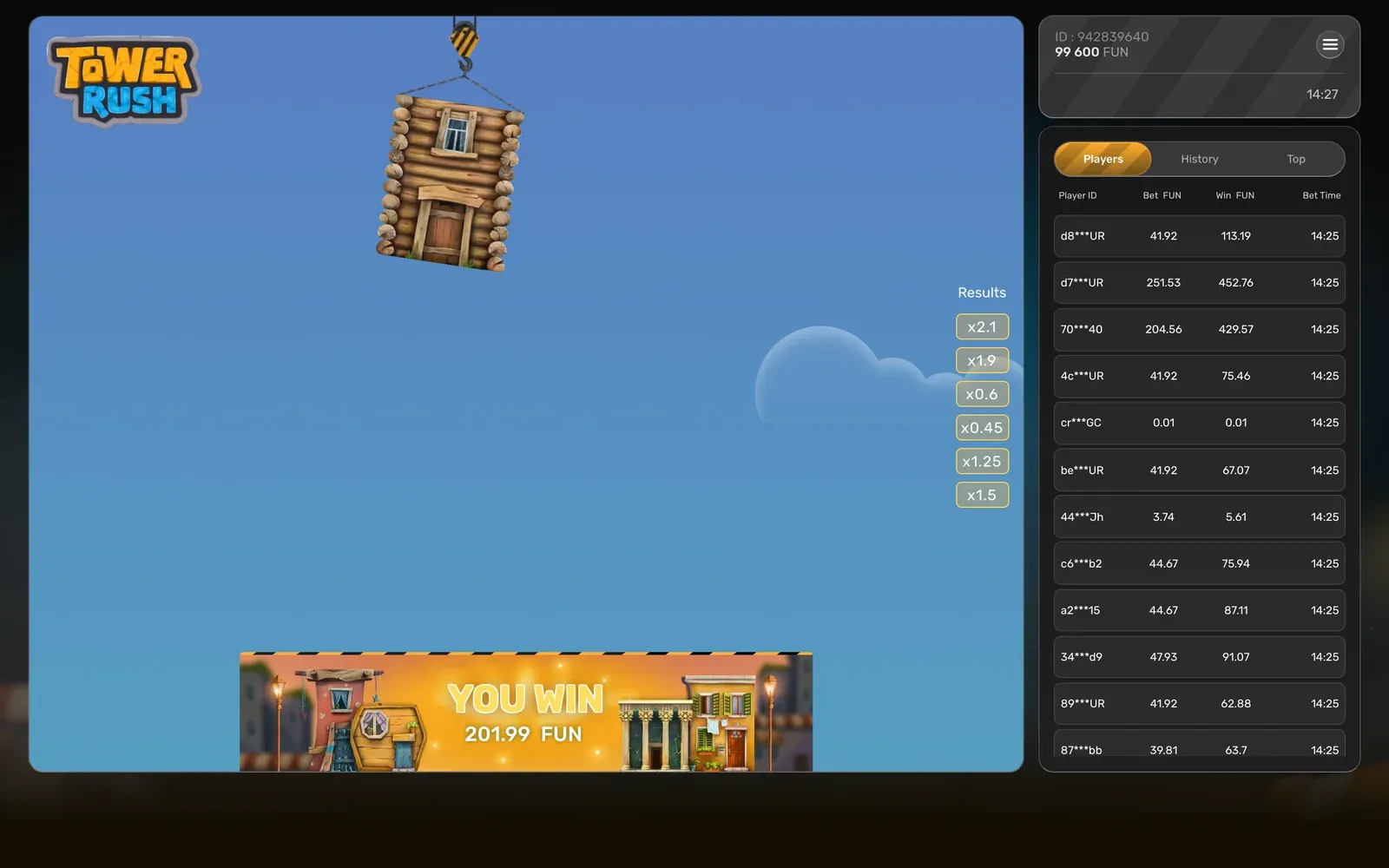
- Build again. Sixth floor: x2.1. Win: 201.99 FUN.
- Cashout. A YOU WIN 201.99 FUN banner appears, the balance updates and the table resets.
Had any of those presses collapsed the tower instead, the result would have been a red x0, an OOPS banner and the 100 FUN stake gone. And notice step 4: a player who stopped building there, at 50.63 FUN, would have cashed out half the stake after four successful floors.
Two details worth noticing. First, the win is always visible on the Cashout button, so you never have to multiply in your head. Second, the game does not stop you from building at a loss: if the running win drops below your stake, Build and Cashout both stay available.
How the odds multiply
Each floor's odds multiply everything that came before. That is what makes Tower Rush feel explosive, and what makes it unforgiving.
| Floor | Odds | Running coefficient | Win on Rs 500 |
|---|---|---|---|
| 1 | x1.5 | x1.50 | Rs 750 |
| 2 | x2.0 | x3.00 | Rs 1,500 |
| 3 | x0.6 | x1.80 | Rs 900 |
| 4 | x1.25 | x2.25 | Rs 1,125 |
| 5 | x2.4 | x5.40 | Rs 2,700 |
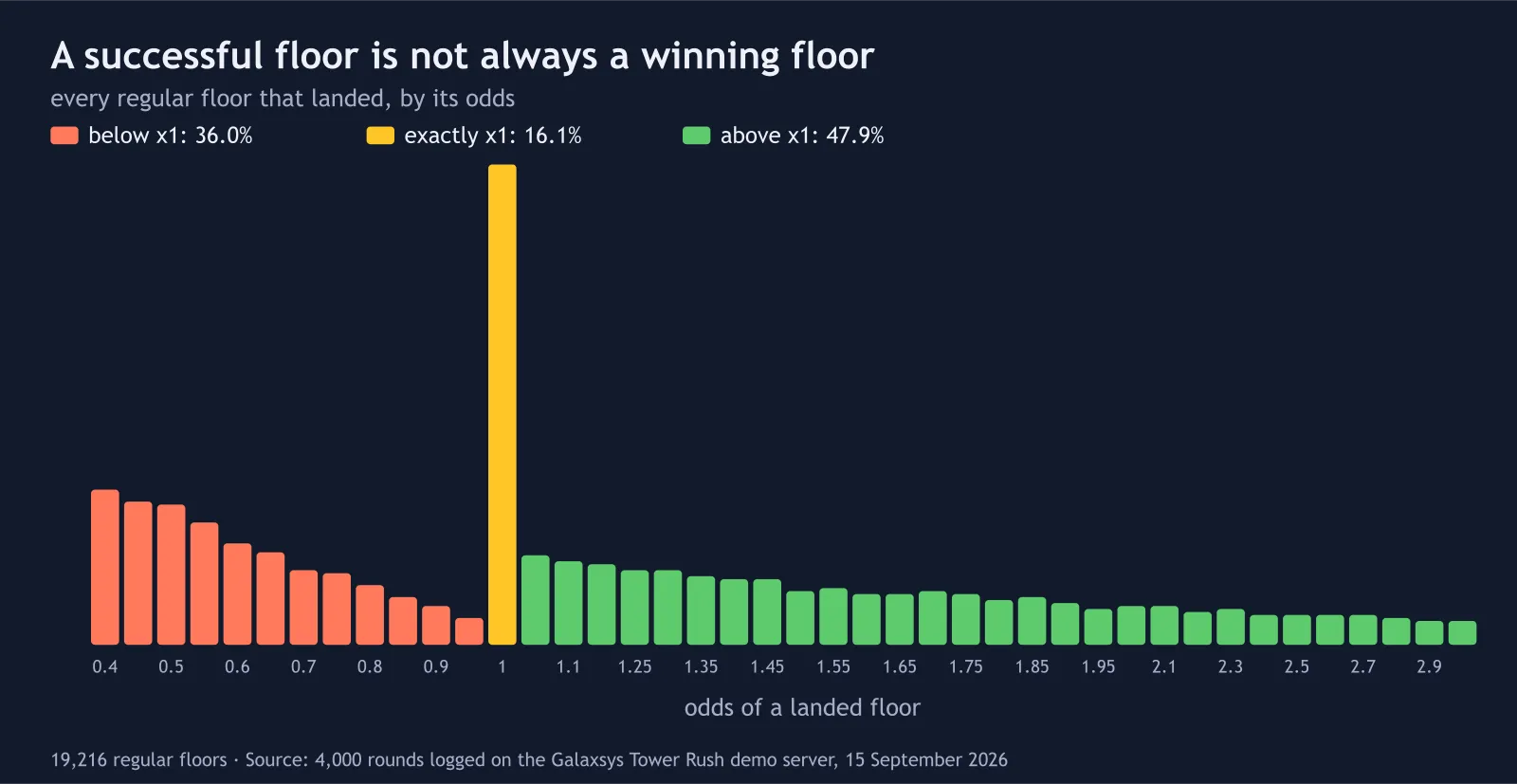
Across the floors we logged on the demo server, about a third landed below x1, about one in six at exactly x1, and about half above x1. The average floor is about x1.18, but because the numbers multiply, the typical tower grows far more slowly than that average suggests.
This is the single most useful thing to know: a successful floor is not the same as a winning floor. The distribution chart below shows every value we saw.
The three bonus floors
Bonus floors look exactly like normal floors while they hang from the crane. You only learn what they are once they land.
Frozen Floor. Freezes your current win. If the tower later collapses, you are paid the frozen amount instead of nothing. If you keep building and cash out higher, you get the higher amount; if you cash out lower, you still get the frozen amount. Only one Frozen Floor can happen per round.
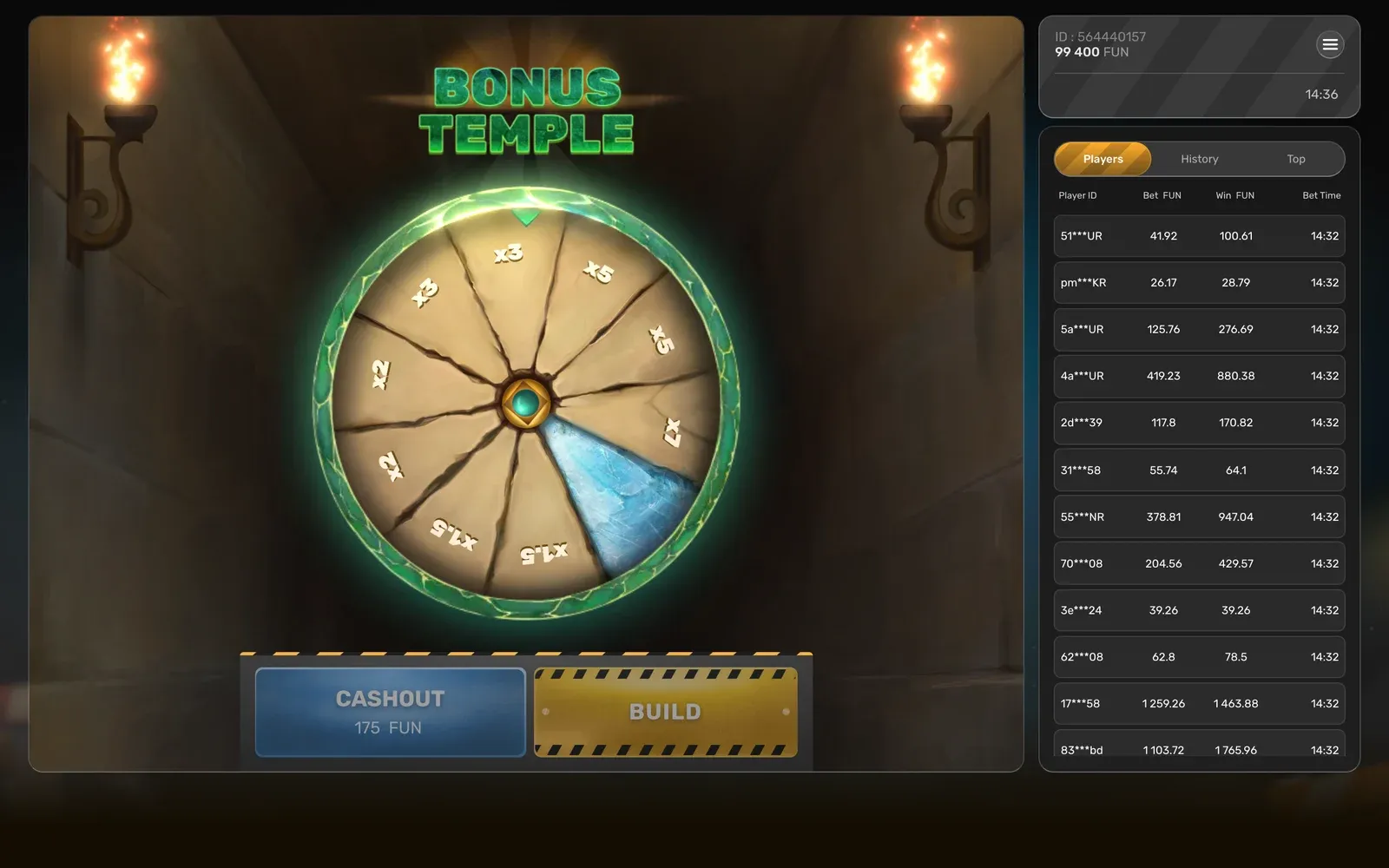
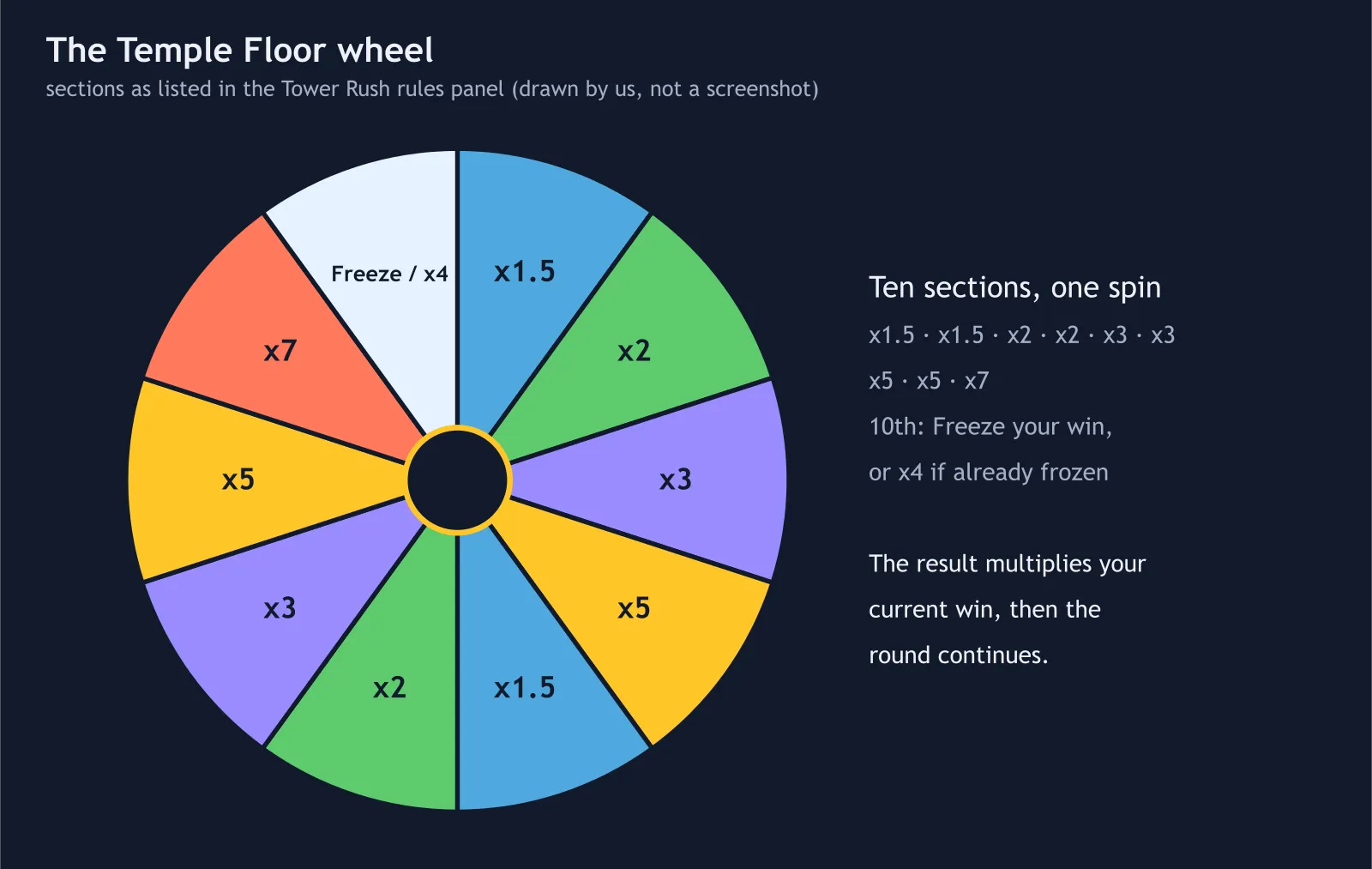
Temple Floor. Opens a bonus wheel with ten sections: x1.5, x1.5, x2, x2, x3, x3, x5, x5, x7, and a tenth section that is a Freeze if you have not frozen yet, or x4 if you have. The wheel spins once, its result multiplies your win, and the round continues. Several Temple Floors can land in one round.
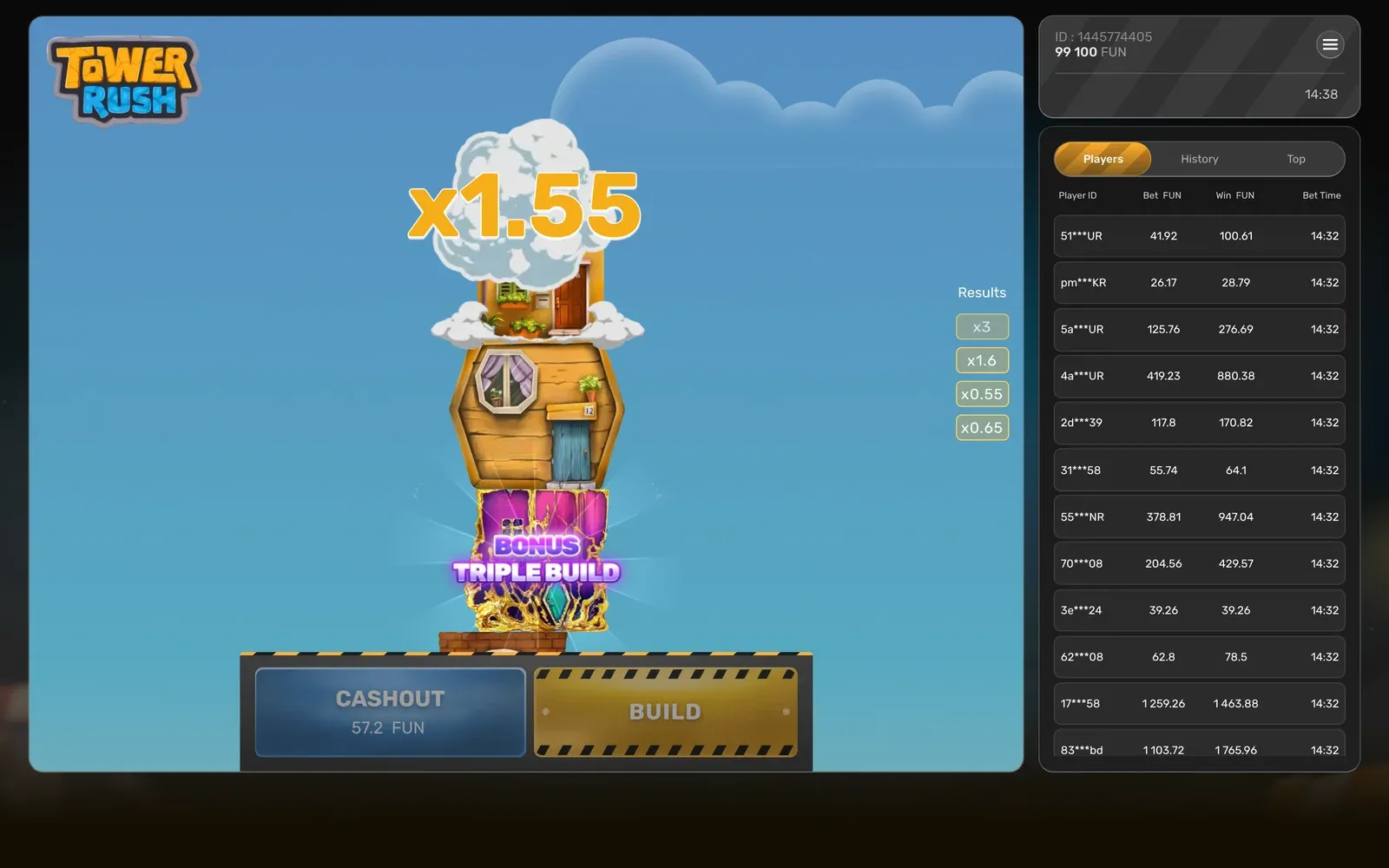
Triple Build. Three extra floors are placed automatically, each with odds above x1. It is the most generous-looking bonus, and in our sample the most common of the three. It can also repeat within a round.
All three are rare. In our log, Triple Build appeared less than once per hundred presses, the Temple wheel about two-thirds as often, and the Frozen Floor far less often. A strategy that waits for bonus floors is a strategy that waits a long time.
When the tower collapses
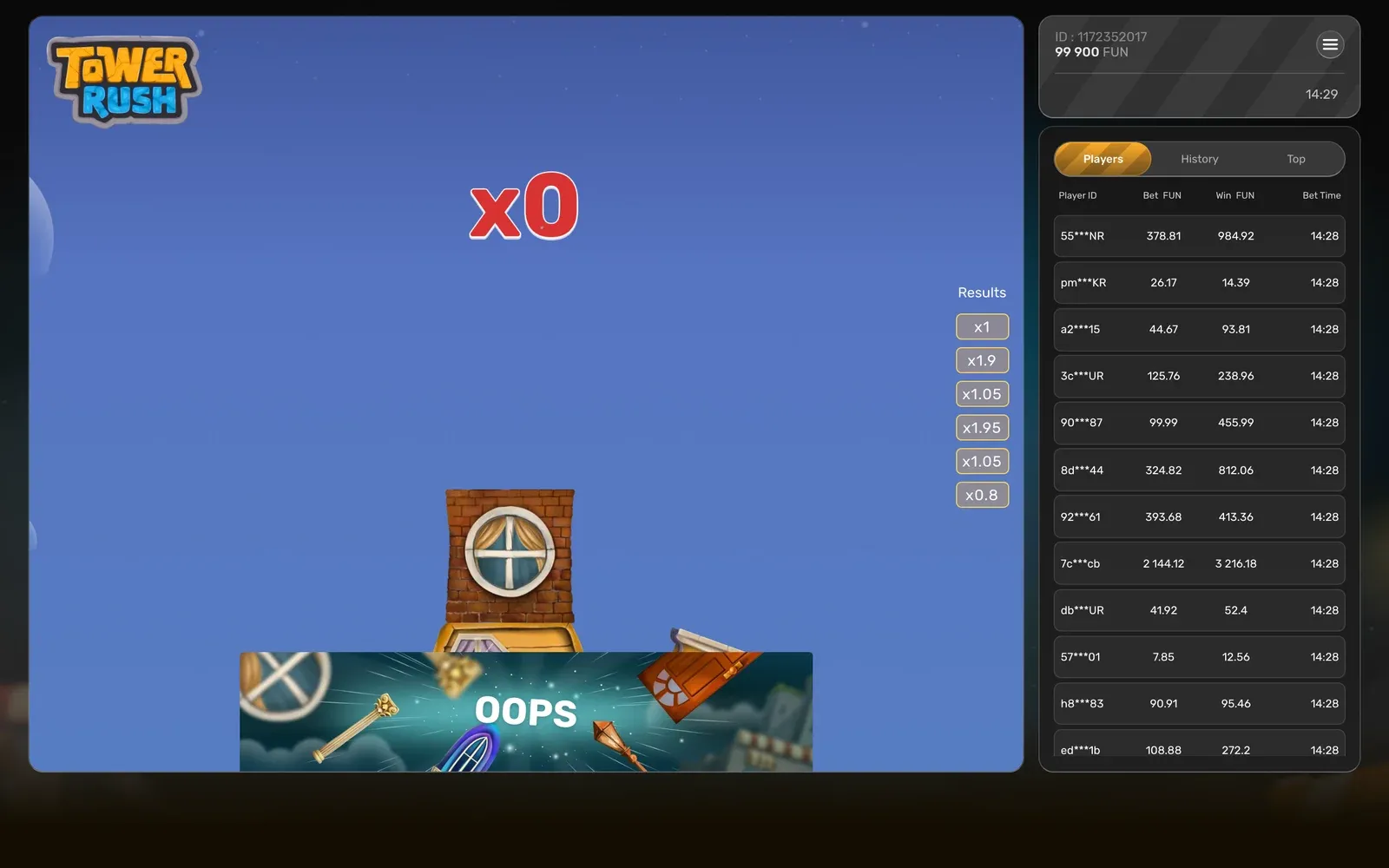
A collapse is shown as a floor sliding off the tower, a red x0 and an OOPS banner over the buttons. The stake is lost, unless a Frozen Floor landed earlier in the round.
What decides a collapse is the game server, at the moment you press Build. There is no timing to master: tapping faster or slower, or waiting for the crane to swing to the centre, changes the animation but not the outcome.
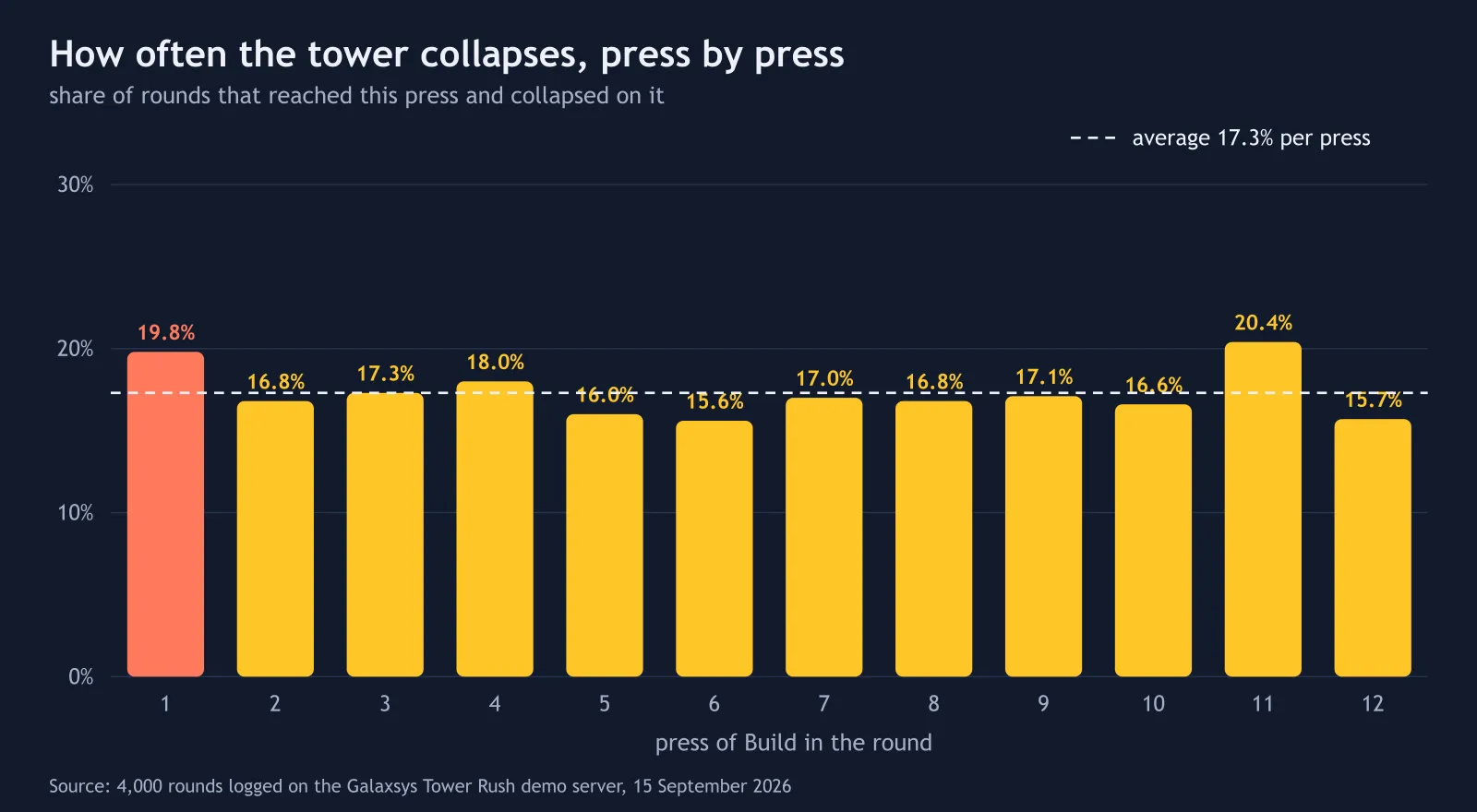
In the rounds we logged, the first press was the most dangerous, collapsing about one time in five. After that the rate settled around one in six per press, with no clear trend upwards as the tower grew. That matters: the tower does not get "safer" or "due" as it gets taller.
Playing on a phone
On a phone the game switches to portrait. The crane and tower take the top of the screen, the Results column shrinks, and Build and Cashout sit side by side at the bottom within reach of your thumb. The side panel with Players, History and Top moves behind a tab.
It is the same client in a different layout. You do not need an app to play on your phone: the demo and any casino's Tower Rush open in Chrome or Safari. If you do use a casino's app, it simply wraps the same game.
History, Players and Top
- Players shows bets as they happen: masked player ID, stake, win and time. Busy tables fill it within seconds.
- History lists your own rounds. At a real casino this is the first place to look if a result seems wrong.
- Top ranks the biggest wins. It is exciting to read and useless as a guide: it shows the few towers that went very high, never the thousands that collapsed on floor two.
Disconnections are covered by the rules. If your connection drops during a round, the round ends after one hour of inactivity, and any win already registered is credited to your balance.
Mistakes beginners make
- Reading x0.8 as a win. It is a successful floor that lost 20% of the tower's value.
- Building to "get back" to the stake. If the tower sits at x0.7, the next press still has the same collapse risk as any other.
- Using All in. One tap stakes the whole balance. There is no undo.
- Chasing the Top panel. The biggest wins are real and extremely rare.
- Trusting "predictor" apps. The next floor does not exist until the server decides it. We explain why on Strategy.
- Confusing Tower Rush and Tower X. Tower X has no Cashout button at all. See Tower X.
Now you know the rules better than most players.
FAQ about Tower Rush rules
How do you win in Tower Rush?
You win when you press Cashout after at least one floor has landed and the running coefficient is above x1. The win equals your stake multiplied by all the floor odds of the round. If a floor collapses before you cash out, you lose the stake unless a Frozen Floor landed earlier.
Can a Tower Rush floor have odds below x1?
Yes. The game's minimum coefficient is x0.4, and in our demo log about a third of landed floors were below x1. Such a floor counts as successful but reduces your running win.
What does the Frozen Floor do?
It locks your current win as a guaranteed minimum for the round. If the tower collapses later, you receive the frozen amount; if you cash out higher, you receive the higher amount. Only one Frozen Floor can land per round.
What is on the Temple Floor wheel?
Ten sections: x1.5, x1.5, x2, x2, x3, x3, x5, x5, x7 and a tenth section that freezes your win, or pays x4 if your win is already frozen. The wheel spins once and its result multiplies your current win.
Does Tower Rush have auto cash-out?
No. Every Cashout is a manual decision. Tower X, the SmartSoft game with a similar name, pays automatically at the end of each round, but it has no cash-out choice at all.
What happens if my internet disconnects during a round?
According to the rules, the round ends after one hour without reconnecting, and any win already registered is transferred to your balance. If the casino's software malfunctions, bets and payouts for the affected rounds are voided and stakes refunded.